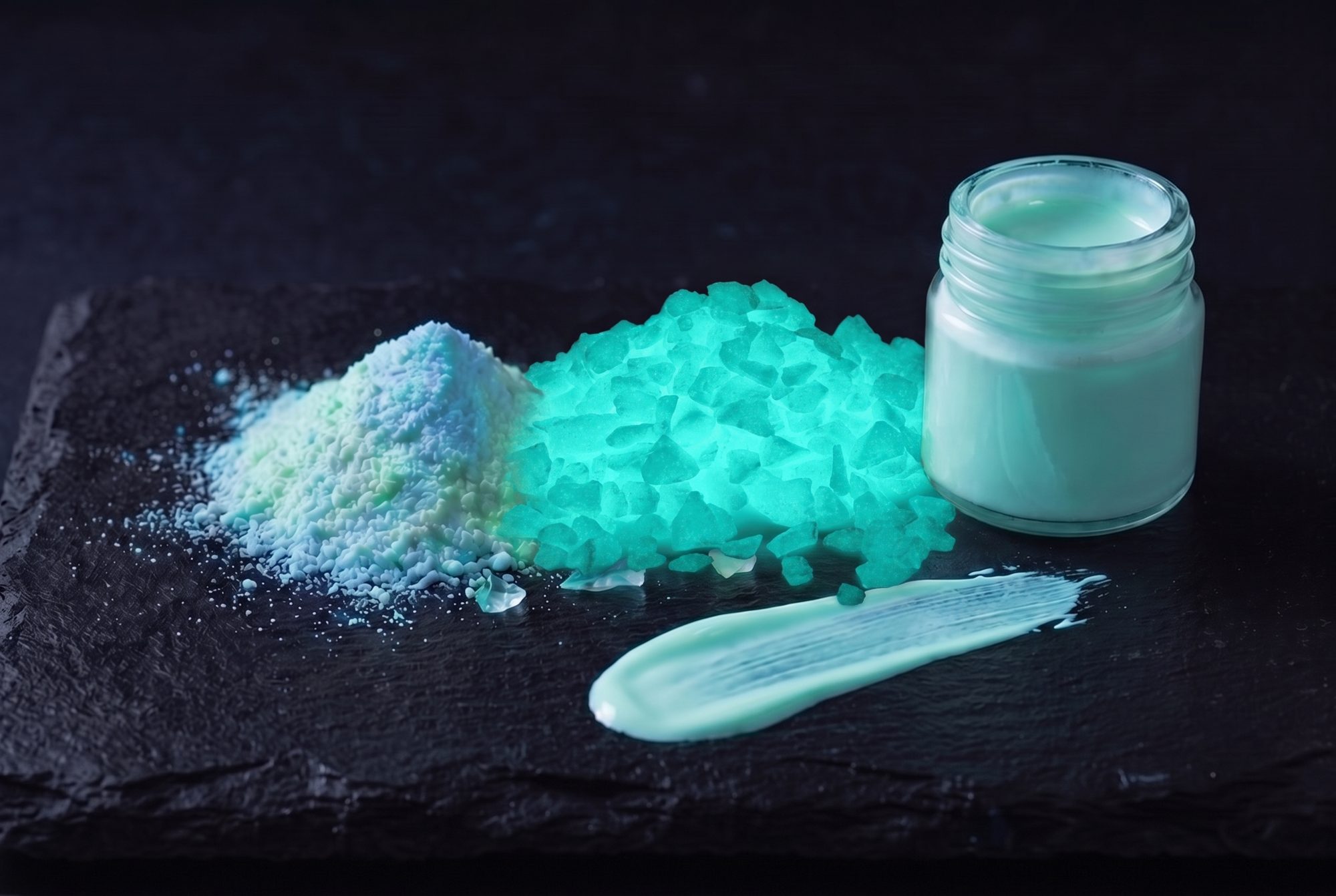
Phosphorescent pigments, paints and granules for exclusive interiors and outdoor spaces. They charge with daylight or lamplight and return it as a soft afterglow – without power, wiring or fixtures.
Blue-green and blue: more than 10 hours, brightest at first, then a gentle glimmer.
No power, no wiring
Recharges again and again, as often as you like.
Innovated in Germany
By lumentics – glow materials since 2015.
The concept
Discreet by day. Remarkable at night.
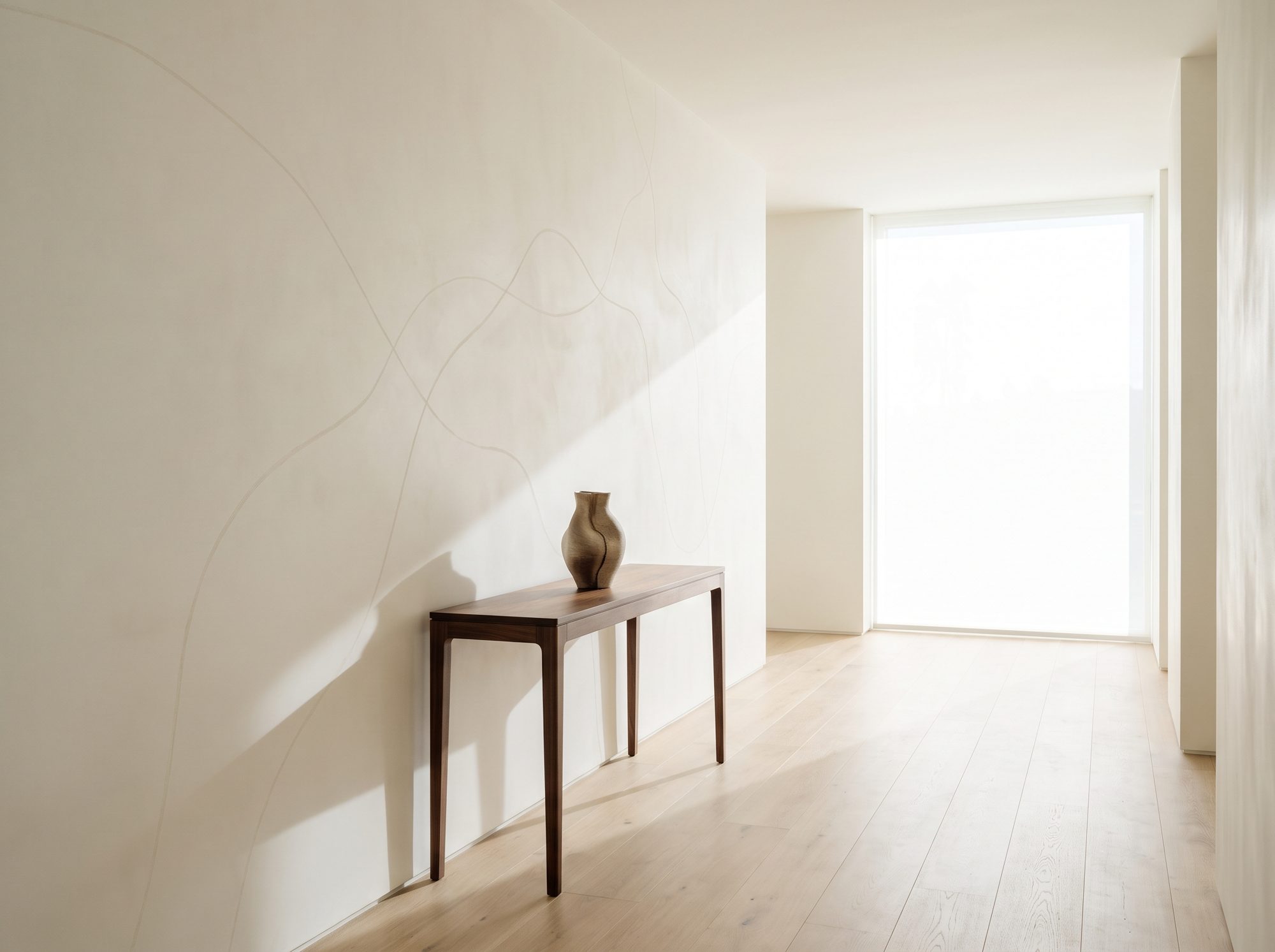
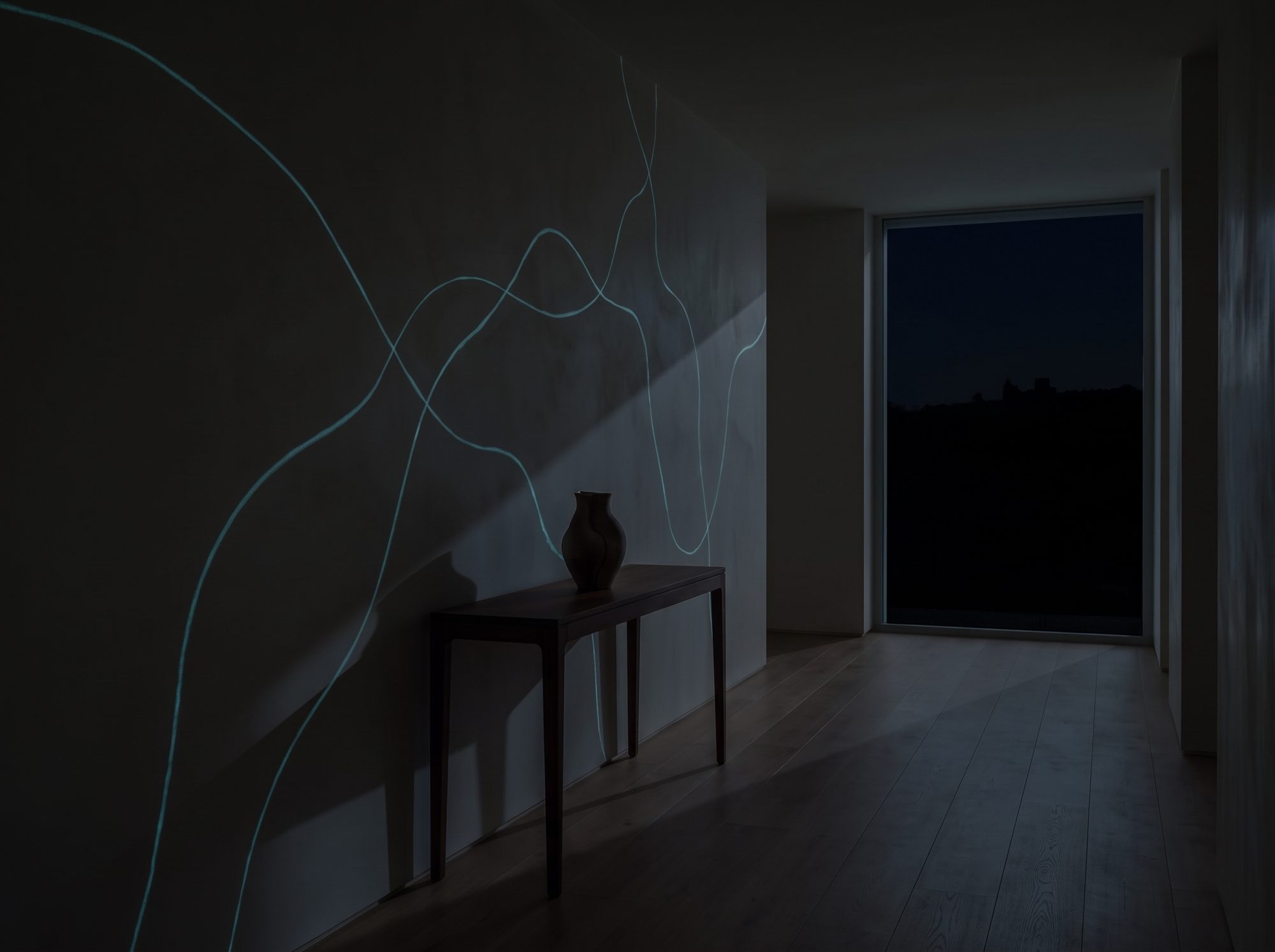
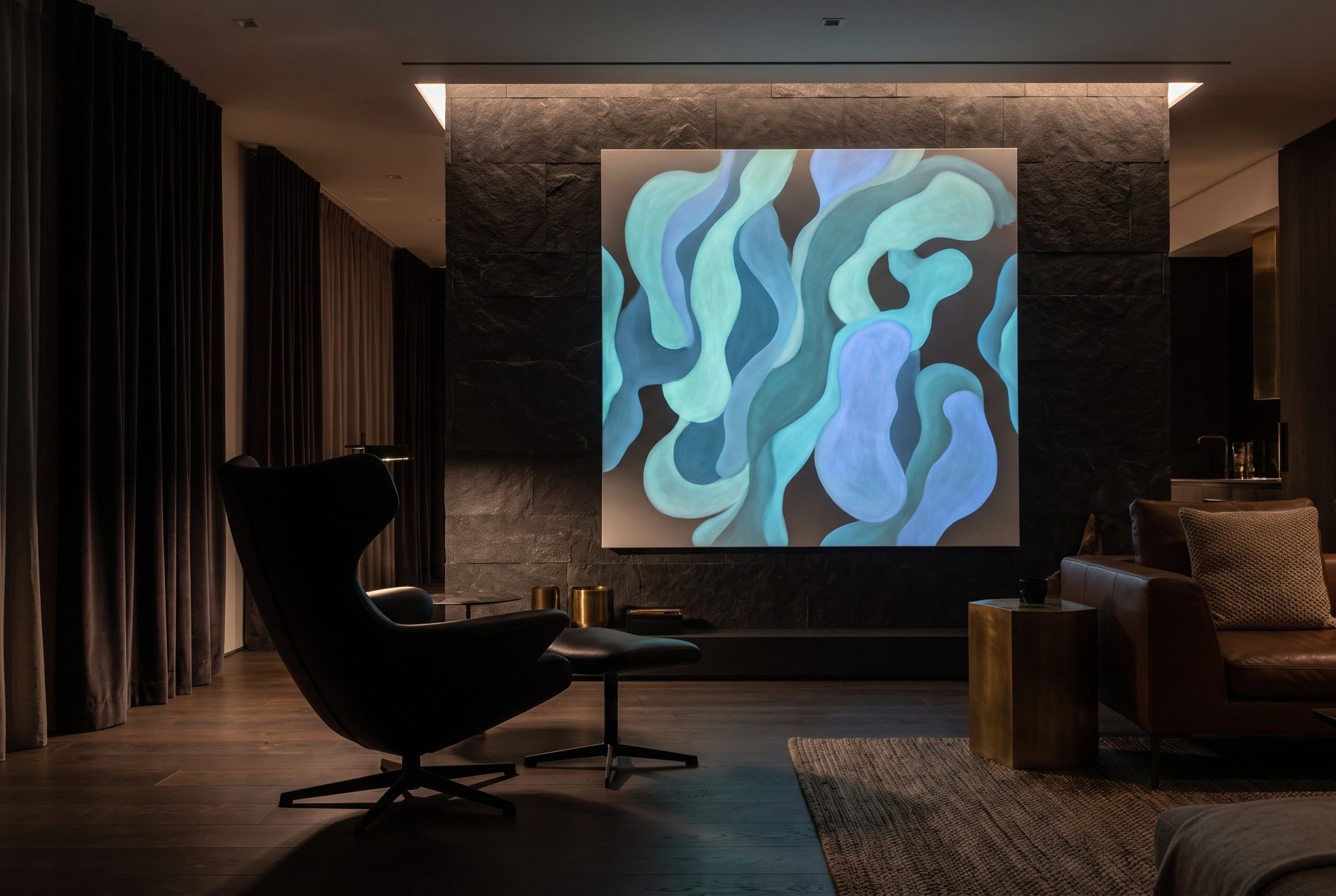
In daylight the pigments appear as a pale, almost neutral tone. Blue is the most neutral of all, nearly white. Once the lights go out, the motif emerges as a calm glow – a detail that reveals itself only to those who are there after dark.
Glow is not lighting. It marks, accentuates and guides, and it works best where it is genuinely dark.
Drag the slider to compare.
By dayAfter dark
Applications
Where glow becomes architecture
From the garden path to the dining table: the same material principle, adapted to surface, carrier and light situation. We advise on pigment, colour and dosage for each project.
01
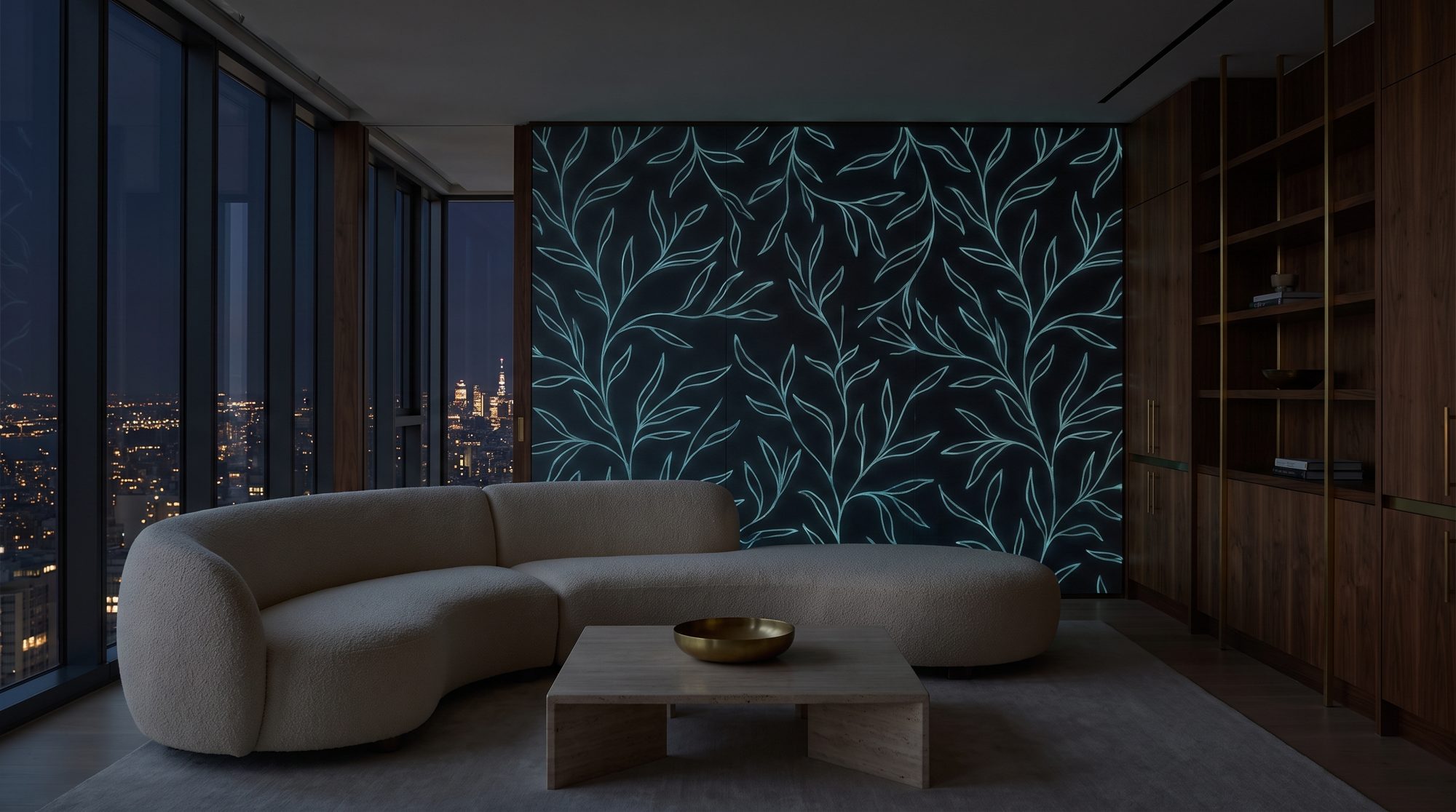
Feature walls & murals
Glow pigments in a transparent or white base, or applied with a spray system in several thin coats. Patterns and accents work better than evenly glowing full surfaces.
02
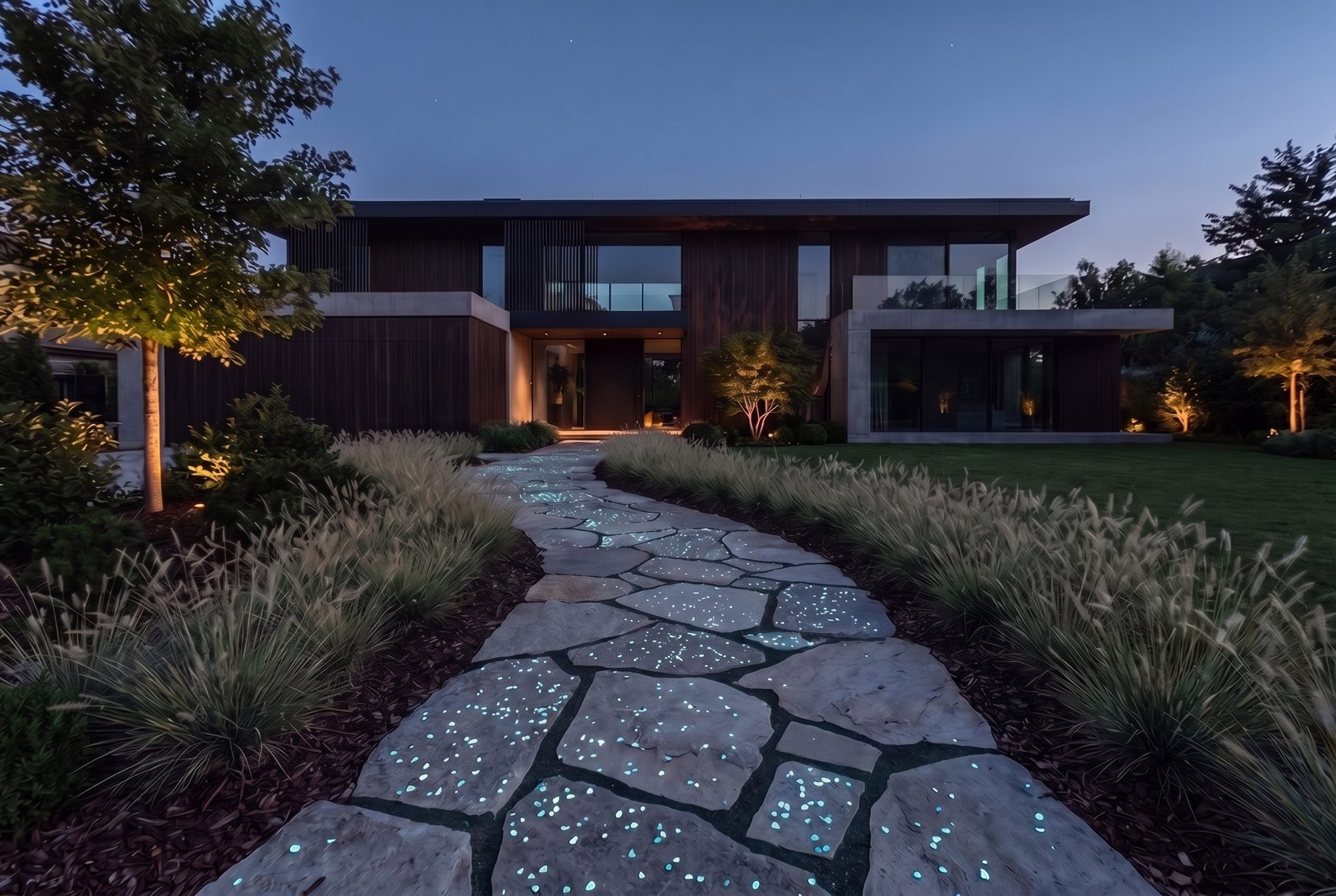
Pathways & stone slabs
Glow chips inlaid into the stone surface and ground flush, or embedded in a walk-resistant transparent top layer of epoxy or outdoor varnish – the slabs themselves begin to sparkle.
03
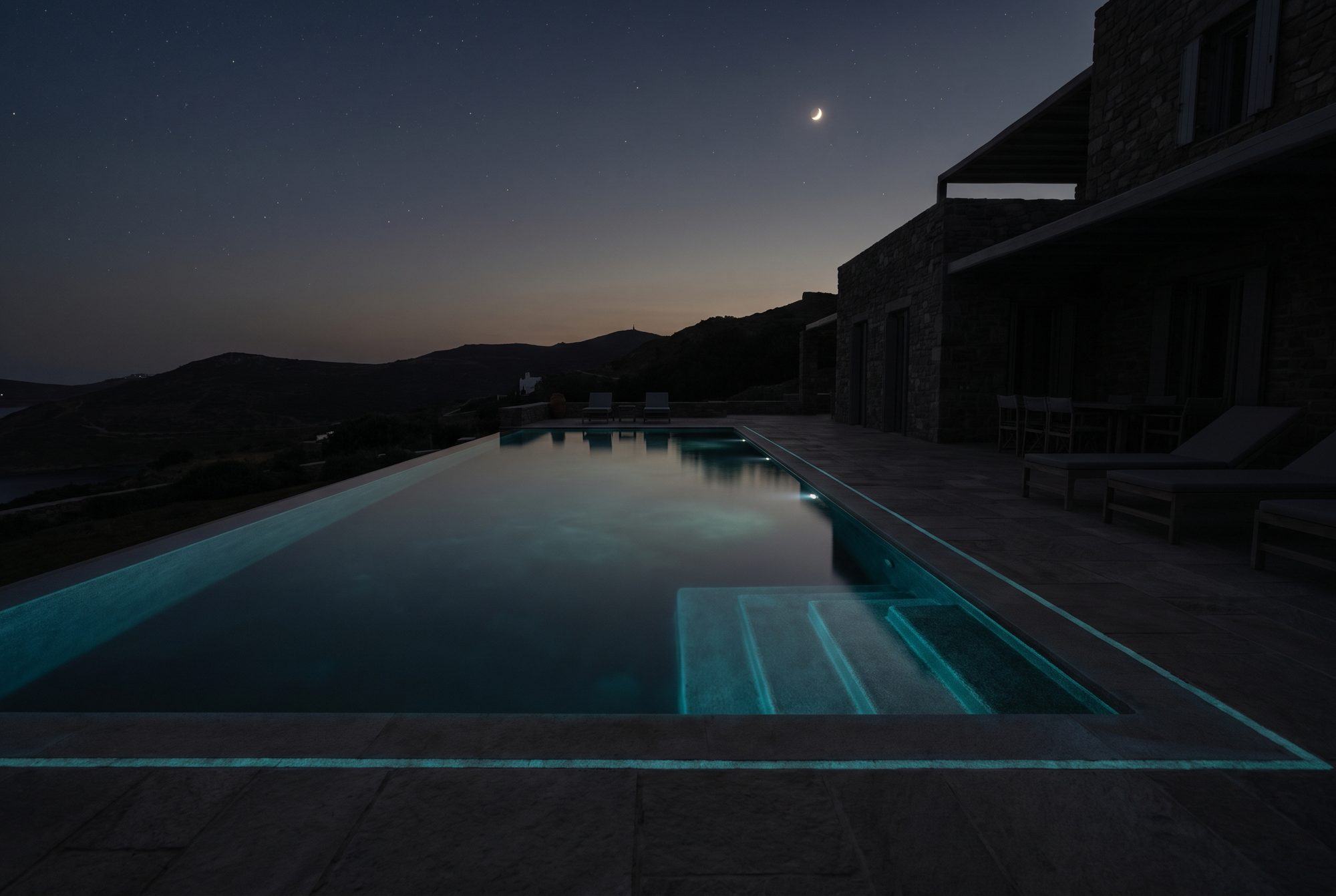
Pools & terraces
The pigments carry a silicon-dioxide coating that keeps them stable even in permanent contact with water. Sealed in weatherproof clear coat or epoxy, edges and steps stay visible in genuine darkness.
04
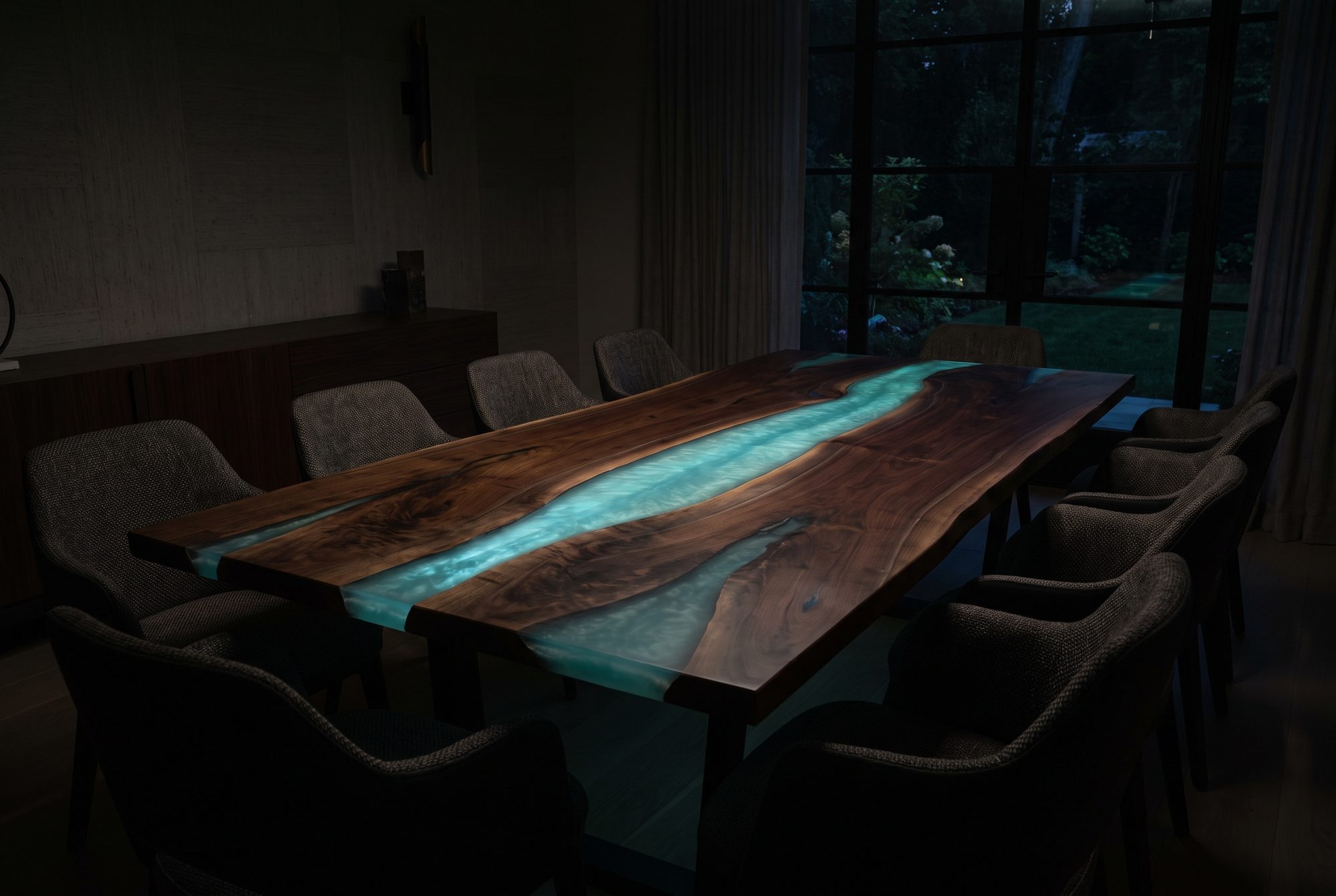
Resin furniture
Pigment stirred into thickened epoxy, or only into a top layer, so it cannot settle. For river tables there is also a blue glitter powder with a metallic effect.
05
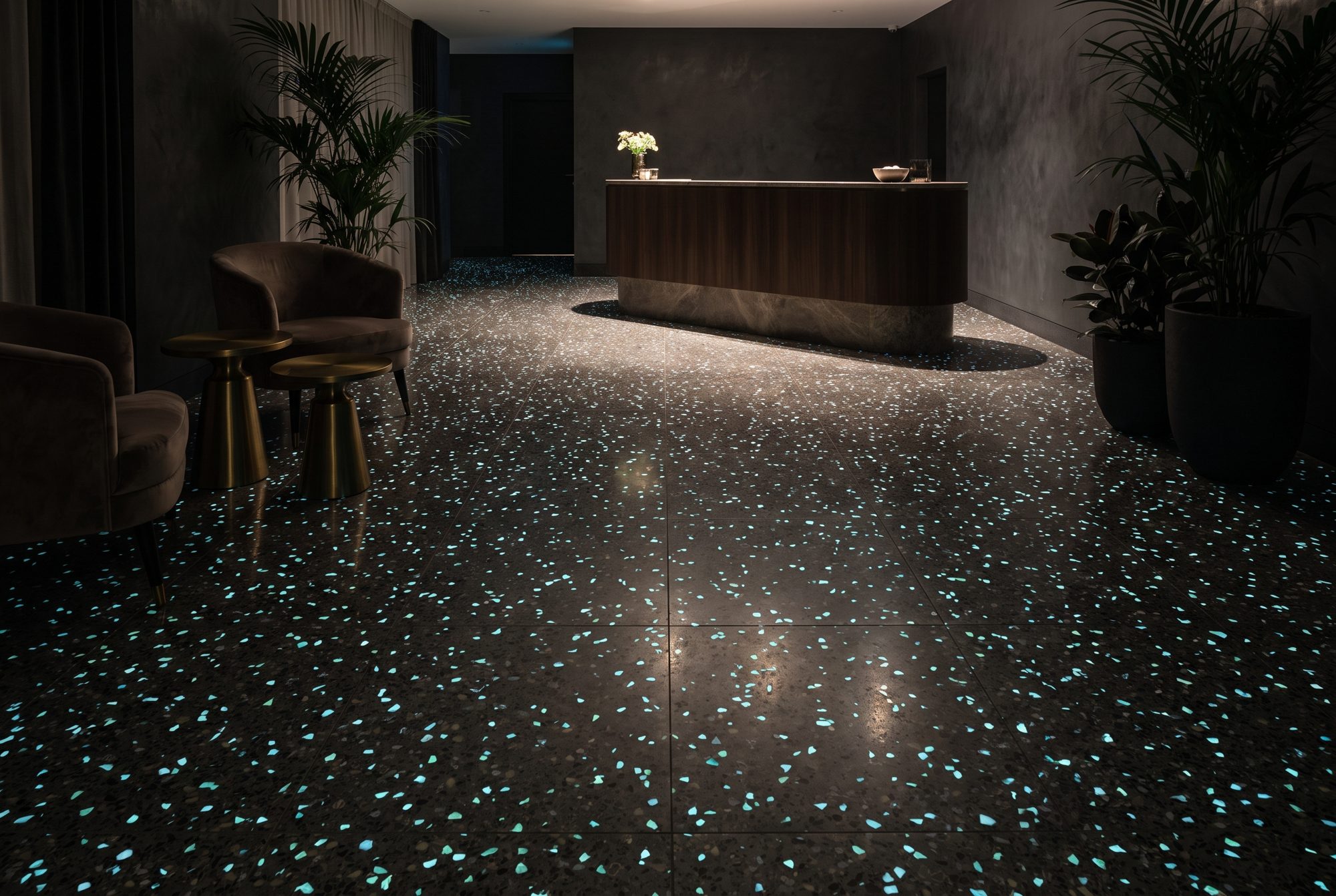
Terrazzo & floors
Glow chips in the floor or in a transparent epoxy coating – a field of stars underfoot, invisible as such by day.
06
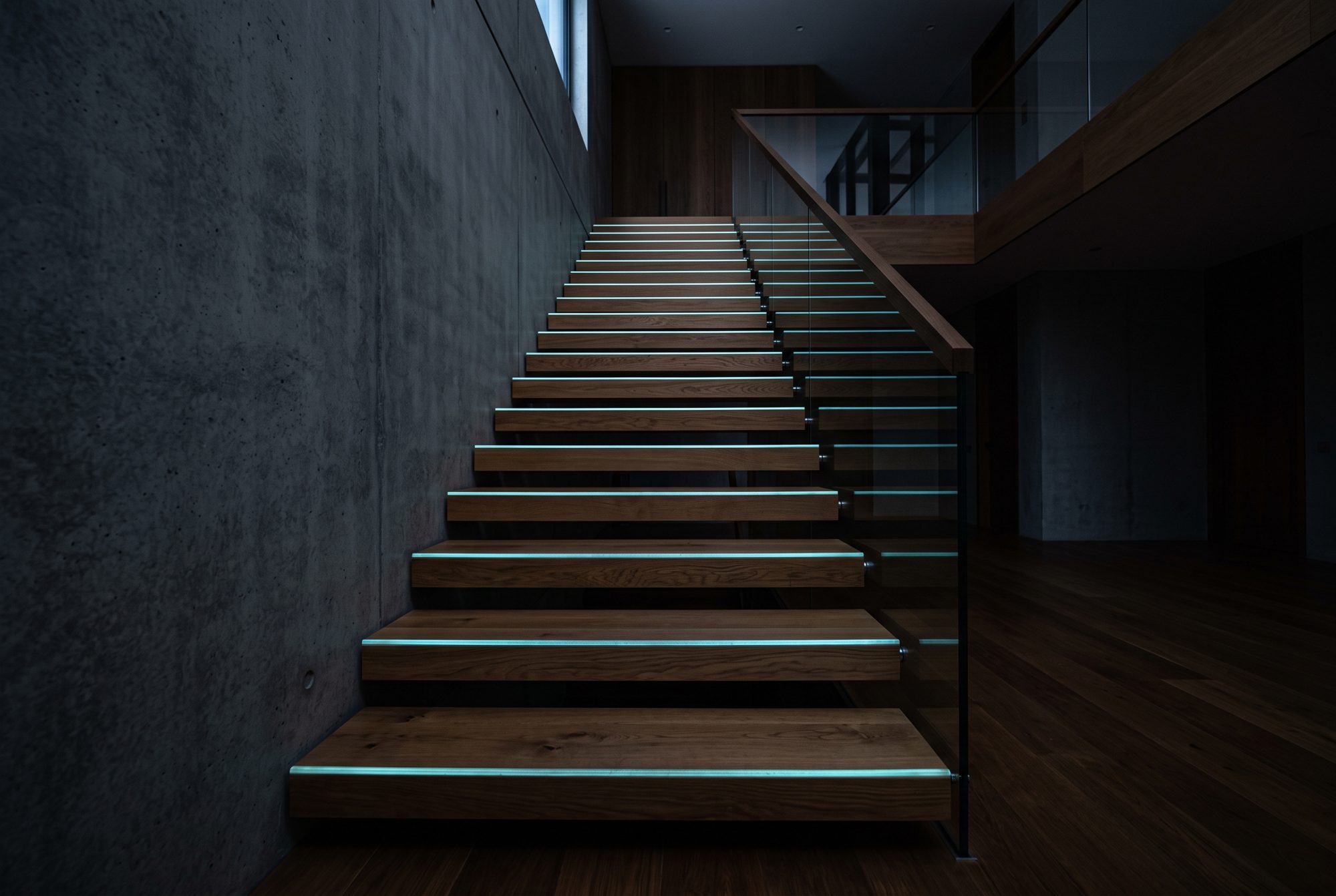
Stairs & orientation
Fine glowing lines on step edges and handrails offer orientation at night. A marker that needs no switch and no power.
07
Glowing stone beds
Angular glow stones and coarse granules, laid as a bed between grasses and boulders, turn a garden into a luminous carpet after dark. Charged by daylight, they glow without a single cable.
All interior scenes on this page are AI-generated visualisations of possible applications.
Materials
One principle, three forms
Pigments
Europium- and dysprosium-doped strontium aluminate – inorganic and stable up to 1,100–1,200 °C. For clear carriers we recommend 15–20 % pigment, for opaque bases 30–50 %.
Ready-to-use paints
Applied with brush or soft roller in two to three coats. Outdoors, finished surfaces are sealed with a waterproof clear coat.
Granules & stones
Glowing chips and stones for floors, paths, resin works and decorative surfaces – embedded, pressed in or cast.
Always test on a small scale first – carrier, substrate and light situation decide the result.
Colour of light
Choosing the glow
Every glow pigment is based on the green afterglow. All other tones are tinted and therefore glow more softly. We advise honestly on what is possible – a true red, for instance, is not.
Green
The natural glow tone – brightest and longest-lasting.
Blue-green
More harmonious and less “technical” – a favourite for interiors.
Blue
The most neutral tone by day, almost white; glows slightly softer.
Built to last
Quietly enduring
>10 h
Afterglow
for blue-green and blue after full charging
≈ 5 %
Over ten years
loss of light output – a long-term experience value
1,100 °C
Thermal stability
of the inorganic glow pigment
∞
Charge cycles
continuous UV does not harm the pigments
Non-radioactive, inorganic pigments. Safety data sheets are available on request.
Process
From idea to afterglow
Step 1
Conversation
Tell us about the space, the surface and the light situation – indoors or outdoors, new build or existing.
Step 2
Samples & tests
We recommend a small test on the original substrate before any larger application.
Step 3
Specification
Pigment, colour, carrier and dosage – matched to the effect you want to achieve.
Step 4
Supply & guidance
Materials from our own range, with processing guidance for your craftspeople and artists.
Questions
Good to know
Anything else? Write to us – we answer every enquiry personally.
How long does the glow last?
Green, blue-green and blue glow for several hours – according to our shop specification more than 10 hours for blue-green and blue. The glow is brightest in the first one to two hours and then turns into a gentle glimmer, visible in genuine darkness.
Does it need electricity?
No. The materials store light from the sun, lamps or UV sources and release it in the dark. UV light charges fastest; artificial light takes a little longer. They can be recharged as often as you like.
Does it work outdoors?
Yes, sealed in a weatherproof clear coat or epoxy. The effect is only visible in real darkness – a nearby street lamp considerably weakens it.
Can a whole wall glow evenly?
Large homogeneous surfaces are difficult to achieve. Patterns, lines and accents are more effective; for larger areas a spray system with pigment in transparent varnish, applied in several coats, works best.
Is it safe?
The pigments are inorganic strontium aluminate and free of radioactive substances. Safety data sheets are available on request. When processing large quantities of powder, avoid creating dust.
Which colour should I choose?
Green glows brightest, blue-green is more harmonious in interiors, and blue looks almost white by day. Other tones such as violet, orange or red are tinted and glow noticeably weaker.
Enquiries
Let us plan your glow
Architects, interior designers, artists and private clients: tell us about your project. We reply with an honest assessment and a suggestion for materials and samples.